
If you live or work in Frisco and you searched diabetes management Frisco, you are usually trying to find a doctor who will check an A1C, look at your medicines, and tell you when to come back. A hospital diabetes program is a different kind of visit. Better Health does not have a Frisco street address. Adults in Frisco book the Plano clinic and say they are coming from Frisco. That nearby path is diabetes management Frisco patients can use: primary-care testing, a medication review, and a follow-up plan.
Frisco diabetes management in primary care means A1C testing, a review of the medicines you already take, and a date for the next visit. Endocrinology is the next step when glucose stays high, or when type 1 diabetes or another complex pattern needs a specialist. There is a separate article for people whose care is centered in Plano. This page is for Frisco adults who keep landing on that Plano URL and still need a booking path that names their city.
Collin County makes the geography simple and the search results messy. Frisco and Plano share a border. A page written for one city can rank for the other. If the result you opened talks about Plano streets and you are trying to get labs done from Frisco, you are in the right clinic and the wrong article. Start here, then book Plano.
What this Frisco visit is for
A Frisco adult often shows up with a number already in hand. A workplace screening flagged a high glucose. Last year’s physical showed an A1C in the prediabetes range, and you want to know what an A1C of 5.8 meant then and whether it has moved. Or you were diagnosed years ago and the refills have been running without anyone looking at the trend.
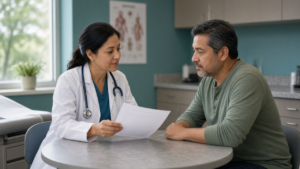
The visit is a follow-up, not a lecture and not a sales pitch for a program. The clinician asks what you eat on a normal Tuesday, whether you walk, and which medicines you actually take, including the ones you skipped last month. Then you look at labs together. You should leave able to name the next step: repeat the A1C, adjust a dose, keep the current plan, or refer.
The Centers for Disease Control and Prevention’s National Center for Health Statistics reported that during August 2021 through August 2023, 15.8% of U.S. adults had diabetes. That figure includes people who had not been told they had it. In the same survey, undiagnosed diabetes meant a fasting plasma glucose of 126 mg/dL or higher, or a hemoglobin A1C of 6.5% or higher, in someone who said a clinician had never diagnosed diabetes (NCHS Data Brief No. 516, November 2024). A single screening number is a reason to book. It is not a diagnosis by itself, and it is not a reason to overhaul your week from a webpage.
Bring the context with the number. A glucose drawn after a large lunch is not the same as a fasting result. An A1C from two years ago is a starting point, not a current plan. If you felt shaky, very thirsty, or unusually tired, say that in plain words. Those details change whether the visit is a routine follow-up or something that should not wait for a convenient Friday.
What testing and follow-up usually include
Most follow-up visits circle a short list. Primary care can check these without turning the appointment into a hospital workup.
- Hemoglobin A1C, which reflects average blood sugar over about three months
- A fasting glucose when the last A1C is missing, old, or does not match how you feel
- The medicine list, including insulin, metformin, and anything a previous office started
- Blood pressure and weight, because those change the plan even when the A1C looks steady
- A follow-up date, so the next lab is not “sometime this year”
Once diabetes is established, kidney labs and a cholesterol panel often belong in the same conversation. Eye and foot checks matter too. Primary care can tell you which of those still need their own appointment. This page does not promise on-site imaging, same-day lab results, or a clinic on a Frisco corner. Labs are ordered from the Plano visit. How fast they come back depends on the lab, not on a slogan on a website.
If you already have notes from diabetes care in Plano, bring them or say so when you book. That article explains testing in more detail and what people mean when they say reversal. This Frisco page does not repeat that argument. It tells you where to book if Frisco is home and Plano is the office you can reach.
Home readings help when they have dates. A note that says “it was 180 after dinner on Thursday” is useful. A memory that it was “high sometimes” is harder to use. If you do not check at home, do not invent a log the night before. Say you do not check. The A1C can still carry the visit.
Do not stop insulin or other diabetes medicine because a blog, a friend, or a single good morning reading made it seem optional. Bring the question to the visit. Stopping on your own is how people end up much higher than the number that worried them in the first place.
When to stay in primary care
Stay in primary care when type 2 diabetes, or a prediabetes result you want watched, can be managed with visits, labs, and medicines you understand. That includes a new diagnosis that still needs a clear plan, and a long-standing case where the real job is keeping the A1C and the medicine list honest.
Ask about endocrinology when glucose stays high after you and your clinician have actually tried the current plan, when you have type 1 diabetes, when you are pregnant or planning a pregnancy, or when low blood sugar keeps interrupting work or driving. A referral is the next step. It is not a verdict that the first visit failed. Primary care should still know the plan after the specialist visit, because blood pressure, vaccines, and the rest of your chart live there.
“Stays high” is a pattern, not one bad breakfast. It means repeat results above the goal you and your clinician set, or symptoms that do not match a reassuring A1C. The CDC brief above uses an A1C of 6.5% as part of how undiagnosed diabetes was defined in that survey. Your personal target can differ, especially if you are older or you have lows. Do not borrow a stranger’s target off a search result.
Skip miracle language. No visit reverses diabetes on a calendar. Some people lower an A1C with food, walking, weight change, and medicine. Some people need medicine for the long run. A good visit ends with a number you will recheck and a plan you can follow on a Frisco week. It does not end with a promise about pounds or a cure.
Booking the Plano clinic from Frisco
There is no Better Health location page for Frisco. The clinic patients use is in Plano, just south of Frisco in Collin County. Say Frisco when you book so the note matches the city you searched. The drive is the practical part. Dallas Parkway and the tollway are the usual routes, and a morning slot is easier than hoping the afternoon backup behaves.
If you also need a head-to-toe checkup, the annual physical for Frisco patients is a different visit. A physical can catch a high glucose. Diabetes follow-up is where you act on that number over the following months. You can book both. Do not expect one slot to cover a full physical and a medication overhaul. If the physical is what you need this month, book that and mention the glucose so the right labs get ordered.
High blood pressure shows up beside diabetes often enough to name it. If your readings have been high at home or at a pharmacy, read hypertension treatment in Frisco and bring those numbers to the diabetes visit. The clinician can fold blood pressure into the same plan instead of treating it as a separate problem you will get to later.
New patients should say they are new. If another office has a recent A1C, bring the printout or a photo of it. You do not need every record from the last decade. The last A1C, the current medicine list, and a sentence about why you are coming are enough to start.
What to bring
A short list beats a binder. Bring what changes the decision in the room.
- Medicines with doses, including ones you stopped and ones you take only sometimes
- Recent lab printouts if you have them, especially an A1C
- Home glucose readings with dates, if you check
- The questions you actually want answered, written down before you are in the chair
You do not need a perfect food diary. A few true examples help more than a cleaned-up week. Breakfast on workdays. What dinner looks like after a late drive. Whether weekends are different. The clinician is trying to see the week you live.
If cost, side effects, or a confusing dose is why a medicine sits in the cabinet, say that. A plan that ignores the medicine you are not taking is a plan on paper. The visit can only fix what you put on the table.
How the visit fits the rest of your care
Diabetes follow-up works better when it sits next to the rest of primary care. Vaccines, a blood pressure plan, and a yearly exam are part of keeping complications from sneaking up between A1C checks. The diabetes specialist service page is the hub for that work at Better Health. This article is the Frisco path into it.
Use the schedule page when you are ready for a visit. Ask for diabetes labs or a diabetes follow-up, and say you are coming from Frisco. If something feels urgent, like confusion, vomiting, breathing trouble, or a glucose reading that is far outside your usual range, do not wait on a blog post or a routine slot. Use urgent care or the emergency room for that.
After the visit, put the follow-up on a calendar you actually see. An A1C that never gets repeated turns into a guess. The point of diabetes care in Frisco, booked through Plano, is a loop: test, review, adjust, and come back. One lab without a return date is a screenshot, not a plan.
Frisco diabetes care questions
Is there a Better Health clinic in Frisco?
No. Better Health does not list a Frisco street address. Patients in Frisco book the Plano clinic and tell the scheduler they live or work in Frisco. That keeps the visit set up as nearby primary-care diabetes follow-up, instead of sending you through a Plano article that answered a different city’s search.
What does diabetes management in Frisco mean here?
It means A1C testing, a review of your medicines, and a follow-up plan through primary care at the Plano clinic. Endocrinology is the next step when glucose stays high after a real trial of the current plan, or when type 1 diabetes or another complex pattern is a better fit. The visit is not a hospital diabetes center and it is not a promise of same-day imaging.
How is this different from the Plano diabetes page?
The Plano article is for people whose care is centered on Plano, including what reversal does and does not mean. This page is for Frisco adults whose searches currently land on that Plano URL. The clinic building is the same. The city you are coming from, and the booking note you should give, are not.
When should I see an endocrinologist instead of primary care?
Ask about a referral if sugars stay high after you and your clinician have tried the current plan, if you have type 1 diabetes, if pregnancy is part of the picture, or if low blood sugar keeps disrupting your day. Primary care can start that referral and should still hold the rest of the chart, including blood pressure and routine follow-up.
What labs are part of a diabetes follow-up?
An A1C is the usual anchor because it summarizes about three months of blood sugar. A fasting glucose helps when the A1C is missing or does not match your symptoms. Kidney labs and a cholesterol panel often join the set once diabetes is established. Which ones you need depends on your last results and how long it has been. This visit does not include a promise of X-ray or other imaging on site.
Can primary care handle type 2 diabetes follow-up?
For many adults, yes. Type 2 follow-up is ordinary primary-care work when the plan is understandable and the numbers can be tracked over time. Type 1 diabetes, pregnancy, and cases that stay uncontrolled belong with endocrinology, with primary care still in the loop. If you are unsure which group you are in, book the primary-care visit and ask. That question is part of the appointment, not homework you have to finish first.
This article is general education for adults considering primary-care diabetes follow-up. It is not a diagnosis, a personal target, or a treatment plan. Talk with a qualified clinician about your own labs, medicines, and symptoms.