
August in Plano means backpacks, not just heat
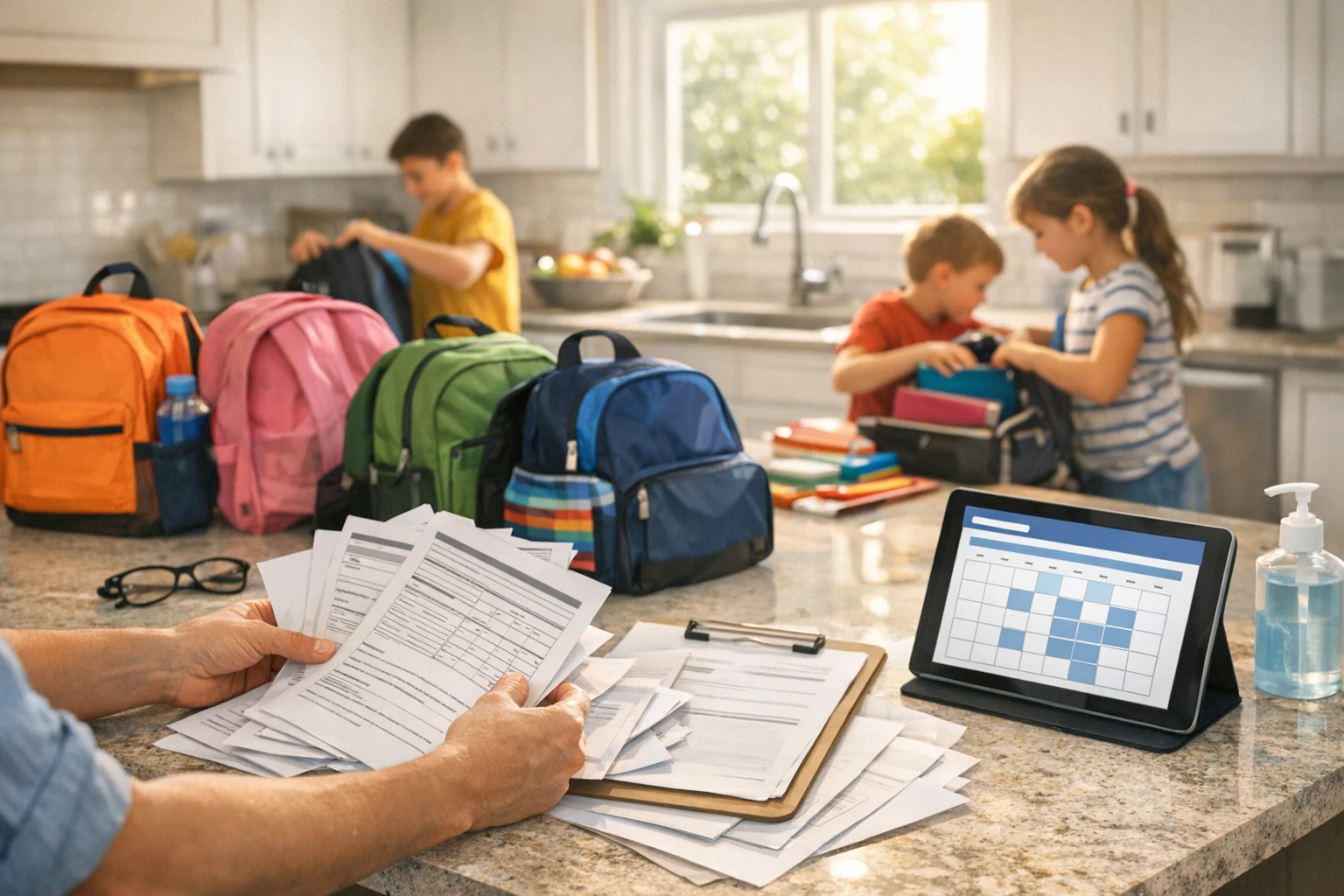
Target runs. School supply lists. The first day photo on the porch. Somewhere in that blur, health paperwork gets pushed to “we’ll figure it out later.” A practical back to school health checklist helps Plano families get the boring stuff done before the car line starts.
This is not about turning your kitchen into a clinic. It is about knowing what your kids actually need before school, what can wait until the first month settles, and when a quick primary care visit saves you a panicked Tuesday night.
Plano ISD, Frisco, Allen, and McKinney all run on tight calendars. UIL sports, band camp, and late-summer travel stack up fast. Use this list like a fridge note: check items off, book what you need in one trip when you can, and keep copies where both parents can find them.
Start with the forms schools actually ask for
Every August, parents dig through email for immunization records, vision forms, and sports clearance packets. Schools want proof, not promises. Before you call the front office, gather what you already have.
Most Texas districts require up-to-date vaccination records or a valid exemption on file. If your child sees a pediatrician outside Collin County, request records early. Portal downloads beat fax machines every time.
Athletes need more than a generic checkup. UIL and many club leagues require a sports physical on the right form, signed within the correct window. Our Plano parent’s guide to sports physicals walks through timing, what to bring, and how it differs from a full annual visit.
Keep a photo of each child’s insurance card and allergy action plan on your phone. Teachers and coaches lose paper. You will not.
Schedule visits before the August crunch
Appointment slots disappear the week before school starts. If your child has not had a well visit in the past year, book now, not the night before band camp.
A school-year checkup is a good moment to catch growth issues, update vaccines, review asthma or ADHD meds, and ask the questions that never fit into a sick visit. What happens during an annual physical exam covers what clinicians typically cover when nobody has a fever.
Try to cluster siblings on the same morning if your schedule allows. One trip to the office beats three separate afternoons fighting Legacy West traffic.
If your child only needs a sports form, say that when you schedule. Clear expectations help the front desk block the right amount of time.
Vaccines and flu season planning
Texas school requirements change slowly, but they do change. Confirm with your clinician which shots your child is due for based on age, not what you remember from kindergarten.
Preteen vaccines (Tdap, meningitis, HPV) often surprise parents because the child “feels fine.” Fine is good. Due is still due. Ask what is recommended versus required so you can plan without scare tactics.
Flu season hits North Texas hard once classrooms fill. The CDC recommends annual flu vaccination for everyone six months and older, with rare exceptions your clinician can explain. Getting flu shots in September or October, before cases rise, gives the best protection for the school year.
COVID boosters may also be on the table depending on age and health history. One conversation at a well visit beats three separate pharmacy runs.
Vision, hearing, and the quiet problems
Kids rarely announce that they cannot see the board. They squint, copy off a neighbor, or get labeled distracted. Schools screen vision and hearing on a schedule, but those screens are not a full eye exam.
If your child gets headaches after reading, sits inches from a tablet, or tilts their head to watch TV, book an eye exam. Primary care can flag concerns and point you to the right next step.
Hearing matters for speech, social skills, and safety. Ear infections, headphone volume, and congestion from Texas allergies all affect what kids actually hear in a noisy classroom.
Allergy symptoms that linger into fall (sniffles, dark circles, fatigue) get blamed on “just back to school.” Sometimes it is allergies. Sometimes it is poor sleep. Sometimes it is both. Mention patterns that show up every August.
Sleep, screens, and the first-month crash
Summer sleep schedules are loose. School demands a hard reset. Most school-age kids need nine to twelve hours depending on age. Teenagers often need more than they think, not less.
Shift bedtime earlier in fifteen-minute steps the week before school starts. Morning light and a consistent wake time help more than one heroic early night.
- Charge devices outside the bedroom when possible, or use a real alarm clock so the phone is not the last and first thing they touch.
- Watch caffeine from energy drinks and large sodas, especially for high schoolers with late homework.
- Plan breakfast that does not rely on a drive-through every day. Protein and fiber beat a sugar spike before second period.
- Build downtime into the schedule. Overscheduled kids get sick more often.
Exhaustion looks like bad behavior, poor grades, and more colds. If mood or focus crashes hard every year, mention it at a checkup. Sleep apnea, anxiety, and ADHD all show up in the classroom before they show up at home.
Nutrition, lunch boxes, and after-school hunger
Plano families eat out often. That is normal. School days still need a plan for lunch, snacks, and the 4 p.m. refrigerator raid.
Pack water. August heat plus PE plus forgotten water bottles sends kids to the nurse with headaches. Label the bottle. Seriously.
If your child has food allergies, confirm the school nurse has updated forms and epinephrine if prescribed. Review cafeteria options if they eat school lunch. “Avoid peanuts” is not a plan by itself.
Starting a new sport or intense training? What to check before starting a new diet or exercise plan applies to teens too, not just adults on January resolutions. Rapid weight loss, supplement stacks, and doubling practice hours without fuel cause real problems.
Skin, lice, and the stuff kids share
Back to school means shared helmets, friendship bracelets, and close head-to-head selfies. Lice happen. They are annoying, not dangerous. Know your school’s policy and keep a fine-tooth comb in the house without shame.
Rashes from sports gear, chlorine, or new laundry detergent flare up when uniforms return. Many common skin issues can start in primary care. See common skin problems a primary care doctor can treat for what usually does not need a dermatology wait list.
Remind teens about clean practice clothes, shower shoes, and not sharing razors or water bottles. Boring advice still works.
Mental health counts on the checklist too
First-day jitters are normal. Weeks of stomachaches, refusal to go, or sudden grade drops are worth a closer look. Transitions hit harder after moves, divorces, or a year of remote learning habits.
Ask open questions: what part of the day feels worst, who they eat lunch with, whether anything online is following them home. You do not need a perfect script. You need repetition.
Primary care can screen for anxiety and depression, discuss sleep and bullying, and coordinate with counselors when needed. This is not overreacting. It is early support.
If your teen drives, sleep and mood matter for safety as much as for grades. A tired new driver on the Dallas North Tollway is a risk nobody wants to learn the hard way.
When to keep them home, and when to call the doctor
Every family plays the morning game: fever or no fever, sniffle or full cold, “please just go.” Schools have return-to-class rules. Know them before you need them.
Fever, vomiting, diarrhea, pink eye, or a rash that has not been evaluated usually means stay home. When symptoms drag on, how long to let a cold go before seeing a doctor gives practical guidance so you are not guessing on day six.
Strep, flu, and COVID still circulate once classes mix. Testing decisions change year to year. Call your clinician when symptoms are severe, breathing is hard, or your gut says this is not a normal cold.
Healthy kids still need a medical home. Why you still need a checkup when you feel fine applies to children who have not been seen in a year, even if they rarely miss school.
A simple timeline for Plano families
Not everything belongs on one weekend. Spread the load.
- June or July: Book well visits and sports physicals if fall sports are on the calendar. Request records from prior doctors if you moved.
- Early August: Buy glasses or contacts if needed. Refill daily meds and inhalers before they run out mid-semester.
- Two weeks before school: Shift sleep. Label supplies and water bottles. Confirm after-school pickup and emergency contacts with the school portal.
- First month: Watch for exhaustion, headaches, and mood changes. Adjust schedules before everyone is underwater.
- September or October: Schedule flu shots for the family when clinics have supply.
Print this timeline or save it in notes. The goal is fewer 7 a.m. panics, not a perfect Pinterest board.
What to bring to the appointment
Parents who show up prepared get more from a twenty-minute slot.
- School and sports forms, even if partially filled out
- Immunization record or portal printout
- List of medicines, vitamins, and allergies
- Questions from your child, written in their words if they are old enough
- Insurance card and custody paperwork if scheduling is split between households
Teens deserve a minute alone with the clinician to ask private questions. Step out when asked. It builds trust for the hard years ahead.
Questions Plano parents ask about back-to-school health
Does my child need a physical every year for school?
Texas schools require proof of immunizations, not always a full annual physical for every student every year. Many families still schedule yearly well visits because growth, development, and prevention questions change quickly in childhood and adolescence.
If your child plays sports, a separate sports physical form is often required annually even when a well visit happened months ago. Ask the school and the league which form they need and what date range counts.
What is the difference between a well visit and a sports physical?
A well visit is broader: growth, vaccines, development, mental health screening, and time for parent and teen questions. A sports physical focuses on safe participation in athletics, heart history, prior injuries, and clearance for practice.
Sometimes both can happen in one appointment if you schedule ahead and bring the right forms. If the calendar is tight, tell the office which paperwork is due first so nothing expires before tryouts.
When should we get flu shots for the school year?
Most clinicians recommend flu vaccination before flu activity rises in the community, often September or October in North Texas. Early fall shots give the immune system time to respond before holiday travel and classroom crowding.
If your child has egg allergy or prior vaccine reactions, mention it before the appointment. Your clinician can advise on timing and which formulation fits your child’s age.
How do I know if my child is anxious versus just tired?
Tired kids are cranky and recover with sleep. Anxiety often shows up as stomachaches, headaches, refusal to go to school, or sudden clinginess that does not improve after a normal weekend rest.
Track patterns for two weeks: sleep hours, screen time, meals, and when symptoms hit. Share that log with your clinician. Schools can help with counselors, but medical causes and treatable anxiety should not be skipped.
Can my teenager see the doctor without me in the room?
Many clinicians offer confidential time with teens for sensitive topics like mood, sexuality, substance use, and birth control. Policies vary by age and office. You may still need to be present for consent and billing depending on state rules and your insurance.
Encourage your teen to write questions down. Confidential minutes often surface concerns that never appear at the dinner table. That is the point.