
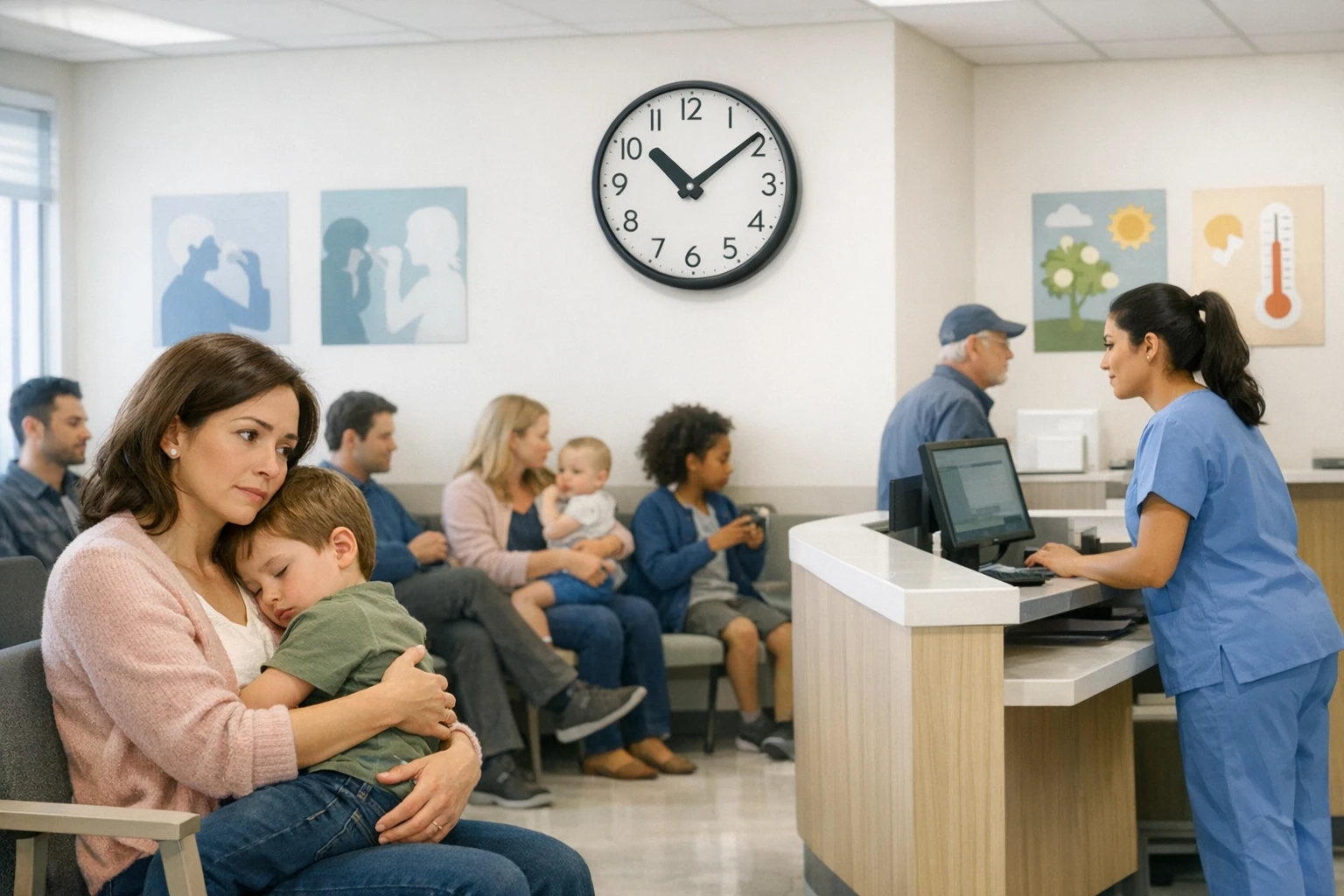
Same-day sick visits: the honest version
You wake up and your throat feels wrong, not just dry from sleeping with your mouth open, but wrong enough that you start mentally canceling your day. Maybe your kid woke up crying about an ear at midnight. You think you need a same-day sick visit at your regular clinic instead of waiting through the weekend. That impulse is normal. Primary care exists partly so you do not have to guess alone in the kitchen at six in the morning.
A same-day visit is usually built for problems that look sick without looking like an emergency. The picture in your head might be fast antibiotics, but the better frame is triage plus a plan. The clinician is trying to answer whether you need testing now, whether you can treat symptoms safely at home, and whether something would be reckless to ignore until Monday.
In Plano, people juggle school car lines, long drives when Dallas pulls you in for work, and jobs where PTO feels precious. Same-day access is not luxury scheduling. It is damage control for real life. That said, there are still limits. A same-day slot is not a quiet hour to unpack ten unrelated concerns or redo a whole wellness agenda. If you try to stack everything into one visit, you and your clinician both walk out tired.
If you have not seen your team in a long time, still come. Just be upfront about what is new versus what has been dragging for months. Chronic stuff often needs its own appointment so the chart matches the story. If you want a longer tour of what a routine check-in can include, read what an annual wellness visit covers on our site. It is written for people who like plain English and a little structure.
Bring curiosity, not shame, if you waited a few days hoping it would pass. Most humans do that. What matters is what you do next.
What a same-day visit is for
Same-day care shines when the story is new or clearly worse. Think urinary burning that started today, an ear that hurts more each time your child swallows, a rash that spread overnight, a fever in an otherwise stable adult who can drink fluids, or a flare of asthma when you already know the pattern. These are the kinds of problems where a focused exam changes what you do tonight, not just what you do next quarter.
It helps when you can describe timing without drama. When did it start, what makes it better, what makes it worse, any fever number you actually measured, and any medicines you already tried from the cabinet. If you take prescriptions for blood pressure or diabetes, mention them even if the problem feels unrelated. Drug interactions are boring until they are not.
If you are watching blood pressure bounce at home because stress, salt, and sleep are all doing their thing, you may still book for symptoms, but bring numbers. Patterns beat one lucky reading. For habits that quietly nudge pressure up day to day, everyday habits that affect blood pressure is a readable companion piece you can skim while you wait for your name to be called.
Same-day is also a fair door when you are not sure if you should be worried. Say that plainly. A good clinician will tell you what they are ruling out, what they want you to watch for, and how to reach someone if the script changes after you leave.
When the clinic may say not today
Clinics say no for good reasons more often than people think. It is not personal. Sometimes the schedule is truly full, sometimes the safest answer is the emergency department, and sometimes the problem needs a setting with equipment your clinic does not have on site that day.
Before you call, run through this quick list:
- Chest pressure, trouble breathing, fainting, sudden weakness on one side, or the worst headache of your life: call 911 or go to the ER.
- Severe belly pain, pregnancy pain with bleeding, or a newborn with fever: do not wait for a convenient slot.
- Minor symptoms that can wait two days without risk: a routine appointment may still be fine.
- If you mainly need paperwork, refills for six medicines, and a new rash, say so. You may need more time than a same-day squeeze allows.
If you are turned away from same-day, ask what the recommended next step is. Ask where to go if symptoms worsen tonight. Write it down while you are still on the phone. Stress makes memory worse, not better.
Front desk staff are not trying to be gatekeepers for sport. They are trying to keep people alive and keep schedules honest. Kindness on both sides speeds everything up.
Plano life, traffic, and timing
Plano is not a monolith, but a few patterns show up in conversations. People leave the house early to beat traffic on the tollway, then realize they forgot their insurance card on the kitchen counter. Kids spike fevers right after daycare pickup. Parents try to “just push through” until Friday, then Friday arrives and the clinic is slammed.
If you can, call earlier in the day for same-day. If you cannot, still call. Sometimes cancellations open a late afternoon spot. If you are coming from Frisco or north Dallas, budget extra minutes for parking and the walk in. Arriving flustered makes every symptom feel ten percent worse.
Bring water, a charger, and something to read that is not your work email. Bring a mask if you were asked to wear one. Bring a list of allergies and medicines, even if you think the clinic already knows them. EHRs are helpful and still imperfect.
If you are caring for an older parent and the story is getting complicated, you are not failing by asking for help coordinating. Our overview of geriatric care at MyBetterHealth talks about how teams reduce confusion when more than one doctor is involved. Same-day can be a first step, not the whole staircase.
Public health messaging often reminds us that small delays in care can snowball. CDC materials on chronic conditions keep stressing steady follow-up because missed visits are common after moves and job changes, not because people are careless. If your life recently got rearranged, you are in good company.
After the visit: what usually happens next
When the visit ends, ask what should improve and by when. Ask what should trigger a call back or a trip to the ER. Ask how results will reach you if tests were ordered. If you use a portal, make sure you can log in before you leave the parking lot. Many clinics release labs there first.
If you leave with a new prescription, ask about side effects that mean stop and call. Ask whether you should finish an older antibiotic you never took. Random pills in the cabinet are not a strategy, even when they feel like one at midnight.
If you need a follow-up, book it before you lose momentum. If you cannot afford a medication, say it at the desk or in the room. There are often alternatives, samples, or programs, but only if the team knows the barrier exists.
Same-day care works best when it connects to a longer arc. One visit can calm today. A plan handles next month. If you felt heard and oriented, tell your team. If something felt off, give specific feedback when you are calm. Clinics improve when patients speak plainly.
When you are ready to reserve time with our Plano team, use the button below. If your symptoms change on the way in, tell someone when you arrive. That is not overreacting. That is how triage is supposed to work.
If you are the kind of person who reads everything twice before you believe it, that is fine. Ask for a printed after-visit summary if your clinic offers it. Ask how to reach the nurse line after hours. Ask what “watchful waiting” means in plain words for your specific symptom. Clarity is not needy. It is how adults stay safe when bodies refuse to read the schedule.
Same-day sick visit questions
Is a same-day visit the same as urgent care?
Not exactly. Urgent care centers exist for after-hours issues and quick problems that do not need a hospital, but they do not know your chart the way your primary team does. A same-day slot at your usual clinic is often about fitting you in with a clinician who can read your allergies, your last labs, and what medicines already failed.
That matters when the problem is fuzzy, like a cough that might be asthma, reflux, or a sinus infection. If you are having chest pressure with shortness of breath, severe abdominal pain, or stroke symptoms, the emergency department is the right door, not a schedule tweak.
What symptoms usually fit a same-day clinic visit?
Think problems that feel bad but are not emergencies: worsening sore throat, ear pain, urinary burning, a rash that spread overnight, a fever in an adult who can drink fluids, or a flare of known allergies. The list is not universal because age and medical history change the stakes.
If you are unsure, call and describe symptoms in plain language. A good scheduler will ask a few focused questions and tell you where to go.
Will I see my usual doctor?
Sometimes yes, sometimes a partner clinician. Same-day is partly about who has a safe opening, not about favorites. If continuity matters for your story, say so when you check in. Many teams leave a short handoff note so your doctor sees what happened even if they were in another room all afternoon.
If you need a longer medication review or a new diagnosis conversation, you may still book a follow-up even after a same-day fix.
What if I need labs or imaging?
Many clinics can draw blood or do a rapid test on site. Imaging often depends on contracts and hours. If you need an x-ray, staff may send you to an imaging center or the hospital, then loop results back to your primary team.
Ask how results will reach you, especially if you use a patient portal. Weekend nights in Plano can feel quiet online, so know whether a nurse line exists after hours.
How is billing different from a checkup?
Insurance language is its own language. A problem visit may code differently than a preventive visit, even if they happen in the same room. If you also ask for refills, forms, and three unrelated problems, billing can reflect that complexity.
Ask when you schedule if you want a straight sick visit versus adding paperwork time. Most teams appreciate the honesty.